Content is a key part of any digital product, without content a product has little purpose beyond mere aesthetics. Understanding what content is and what makes good content design, is a key skill to design quality and useful digital products. In this module I will explore content design through three deliverable design projects and a lecture series. This will give me the understanding and skills to design effectively with content.
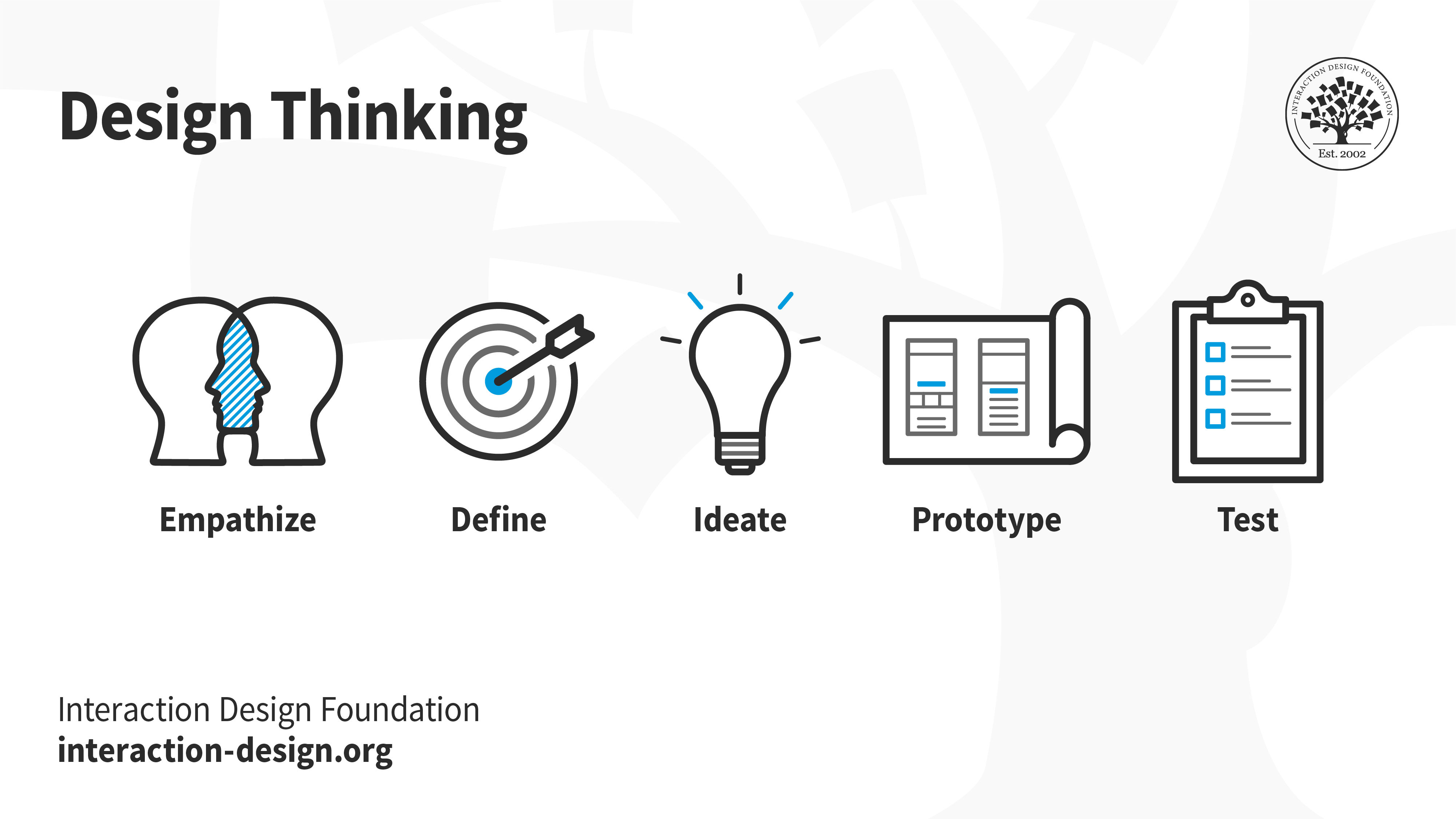
Working backwards for magic is a blog post written by Jordan Moore and in its simplest sense, is Jordan suggesting throwing out the traditional design thinking process of:
Source: https://public-images.interaction-design.org/literature/articles/materials/PONMo61b9QMX0GZvguvRft35nhDu3KG6Asa2NkI3.jpg (Last Accessed 02/10/23)
Rather taking a three step process of:
In truth, the working backwards from magic method is more nuanced than simply rejecting all design thinking workflows or systems, but it does suggest using a different starting point and freeing the mind to think of any possible solution and then looking at feasibility and reality later. It challenges the traditional accepted workflows as systems that inevitably lead us to safe designs and more often than not, small improvements on existing products rather than game-changing design.
It is true often commercial pressures and fear of failure force us to take the cautious and well-trodden path and this is not ignored in the blog post. However, as a University student am I in the best position to test out this concept? Have I got that freedom to think in a truly free way? In truth I don’t know, I still have a design brief to meet and a rubric against which I will be marked. However, during the discovery process at the start of a project I see no reason why I cannot employ the working backwards from magic concept. Whether my final design ends up being revolutionary or something that is more an improvement on existing products is an open question. I will still need however through research and testing to show that my designs have value and would be usable, something the traditional design thinking process provides for by going through the steps and checking all the requirements along the way.
I feel all designers myself included want to design genuinely revolutionary products whatever medium or sector we are designing for. If the working backwards from magic approach can release that style of thinking from my mind, then I wouldn’t be being true to myself not to try it. I really enjoyed this blog post and I feel it definitely raises some good questions in my mind, for me I think a mixed approach of this and other design methodologies we help me discover my best ideas and develop my own, personal design thinking process.
As a word content has many meanings, and can be used as a verb, a noun or an adjective. It can mean feeling happy and satisfied or describe what is in a certain product. In the digital world the definition below from the Cambridge dictionary is what I would define as content.